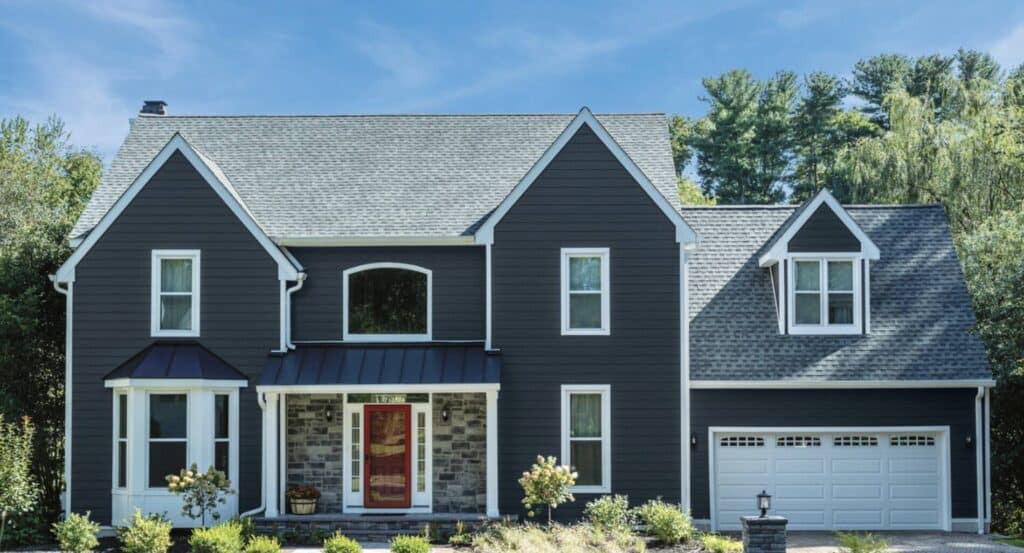
In this blog:
- Start with what’s staying: Coordinate siding with fixed elements like your roof, brick and stonework.
- Follow the 60-30-10 rule: Balance your main siding, trim and accent colors for a cohesive exterior.
- Match your home’s style: Classic neutrals, coastal blues, modern charcoals and earthy greens complement different architectural styles.
- Test before you commit: View siding samples outdoors in different lighting and check any HOA or local guidelines.
Your home’s color is often the first thing guests and passersby notice. Your siding color alone can change the look and feel of your home, but designers know how much more effective your curb appeal can be when you take all the colors of your home into consideration.
Treating siding, trim and accents like your entry door as one combined element can take your home from forgettable to the jewel of the neighborhood. Let’s take a look at siding color palette options for your home style, simple pairing formulas and mistakes to avoid along the way.
Siding Color Combinations at a Glance
| Siding Color | Trim | Accents | Ideal Home Style |
|---|---|---|---|
| Warm tan, beige or cream | White or cream | Dark brown or black | Traditional, ranch and Colonial homes |
| Soft gray | Crisp white or black | Black, navy or natural wood | Almost any home style |
| Deep blue | White or soft gray | Red or natural wood | Colonials and Cape Cods |
| Charcoal | White or matte black | Wood tones or black | Modern homes and modern farmhouses |
| Sage, forest green or clay | Cream, warm taupe or dark brown | Wood tones and simple shutters | Craftsman, farmhouse and wooded lots |
How to Build a Siding Color Combination in Three Steps
Ready to bring your home to the next level, but not sure how to match the right colors? Here’s a beginner-friendly approach.
- Start with fixed points like your roof, driveway or any stonework. These will stay the same throughout the process, so you’ll need to match your new palette to these elements. Does your roof have warmer or cooler tones? Do you have red brick or gray stone elements? Use these as guiding points and keep your siding and trim in the same color family. Warm colors pair well with other warm colors, and the same goes for cool colors. While you can mix and match, if you’re not totally sure of the color combination, it’s best to play it safe.
- Apply the 60-30-10 rule. Generally speaking, siding is about 60% of your home’s total color, with trim and secondary elements sitting at about 30% and accents like your front door about 10%. Using this rule as a guideline keeps the exterior balanced, stopping any one color from being too distracting or disproportionate.
- Check your options in natural light. Hold your samples up in your front yard in both morning and evening light, checking them against roofing and any other elements like your driveway or brickwork.
Popular Siding Color Combinations By Home Style
If you’re in need of inspiration, we’ve got you covered. Here are some popular siding picks for different home styles.
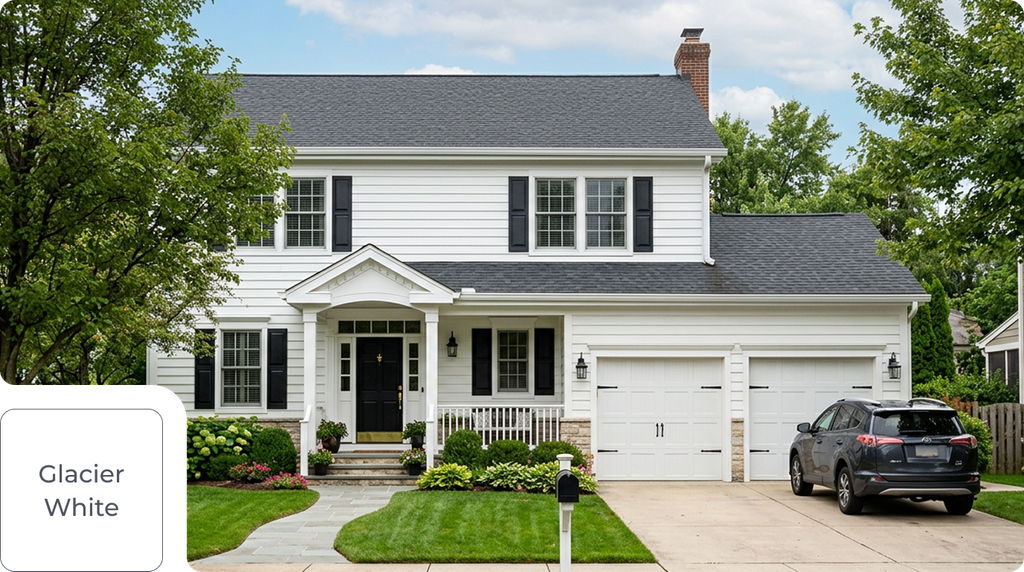
Traditional Homes: Classic Neutrals
A classic choice for a reason, traditional homes shine in neutral shades of white, cream or light tan. These colors also play well as a backdrop for impressive landscaping. If you’ve got a green thumb, light colors show off your efforts at their best. Some possible colors include:
- Siding: Glacial White, Adobe Cream, Natural Linen
- Trim: White, cream or black
- Pair with: Dark brown, black or blue doors and shutters.
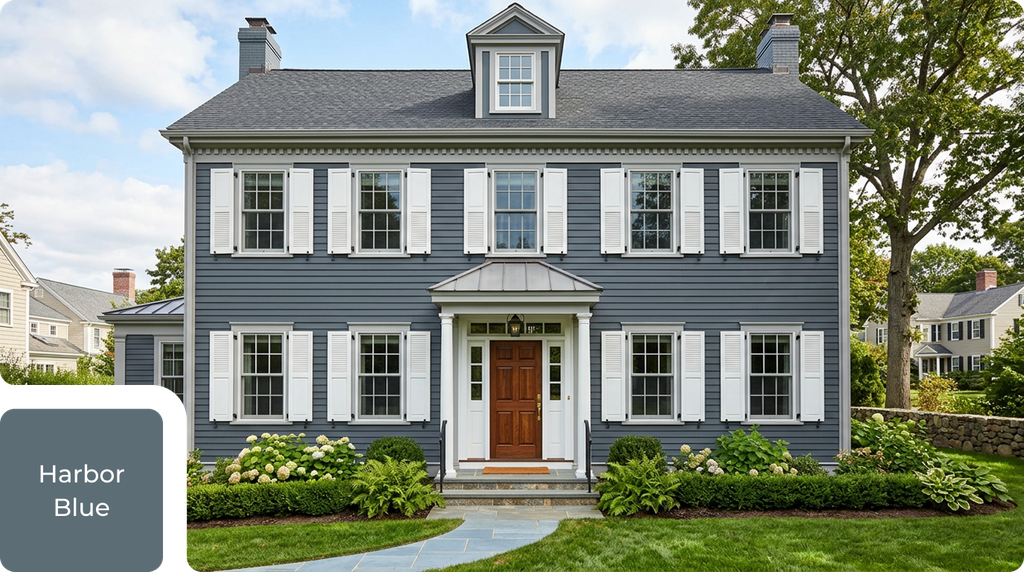
Colonial or Cape Cod Homes: Coastal Blues
Cozy and quintessentially American, these homes are beautifully suited to coastal color palettes. Blue with white trim is a classic color combination for a reason, but you can update your palette with soft gray trim for a more modern twist. Explore your options below:
- Siding: Harbor Blue or Midnight Blue
- Trim: White or gray
- Pair with: A wood-toned door and crisp white shutters.
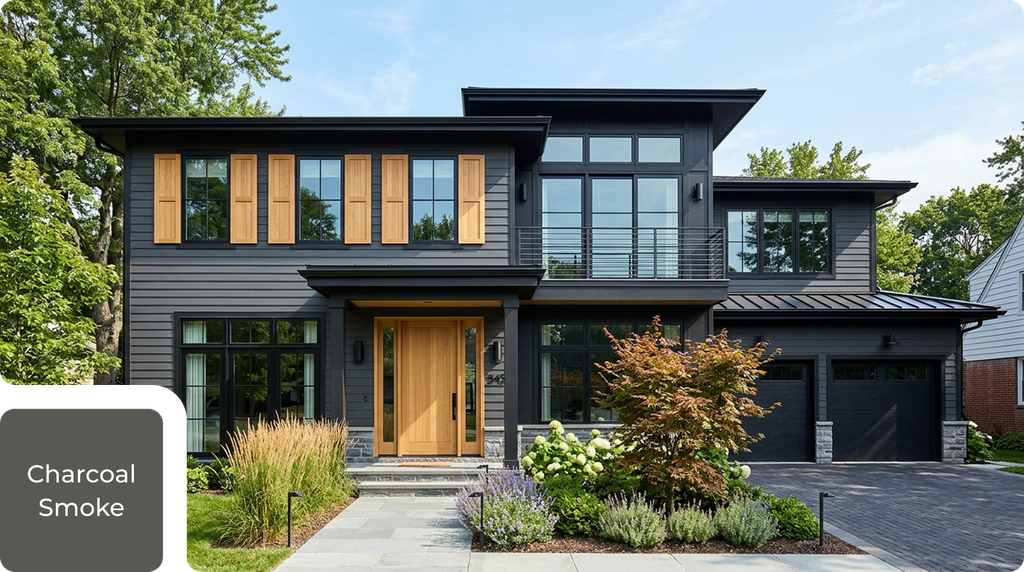
Modern Homes: Sophisticated Black
Eager to make waves? A modern home accomplishes that with its eye-catching design. Up the ante with charcoal or black siding and contrasting accents for a home that’s stunningly fresh and polished. The possibilities include:
- Siding: Charcoal Smoke
- Trim: White or matte black
- Pair with: Light wood or black entry door and shutters.
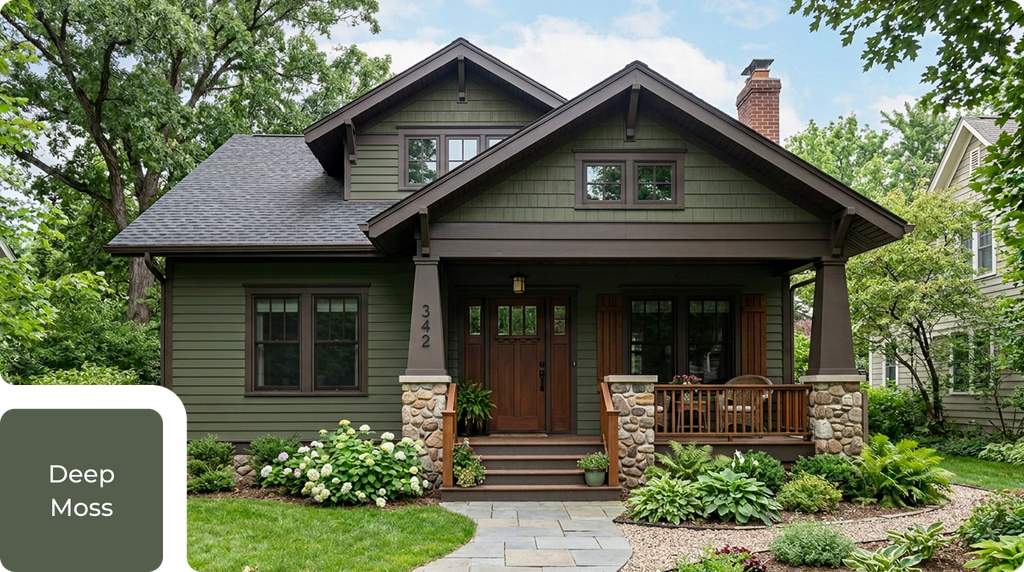
Craftsman or Farmhouse Homes: Soothing Greens
Nature-inspired palettes are ideal for homes that embrace the great outdoors. Whether you’re situated on a wooded lot or simply crave earthy hues, these colors bring harmony and make your home visually calming. Pair it with other cozy natural hues to complete the look. Some options include:
- Siding: Deep Moss or Juniper Ridge
- Trim: Cream, taupe or dark brown
- Pair with: Warm or dark wood-tone entry door and shutters.
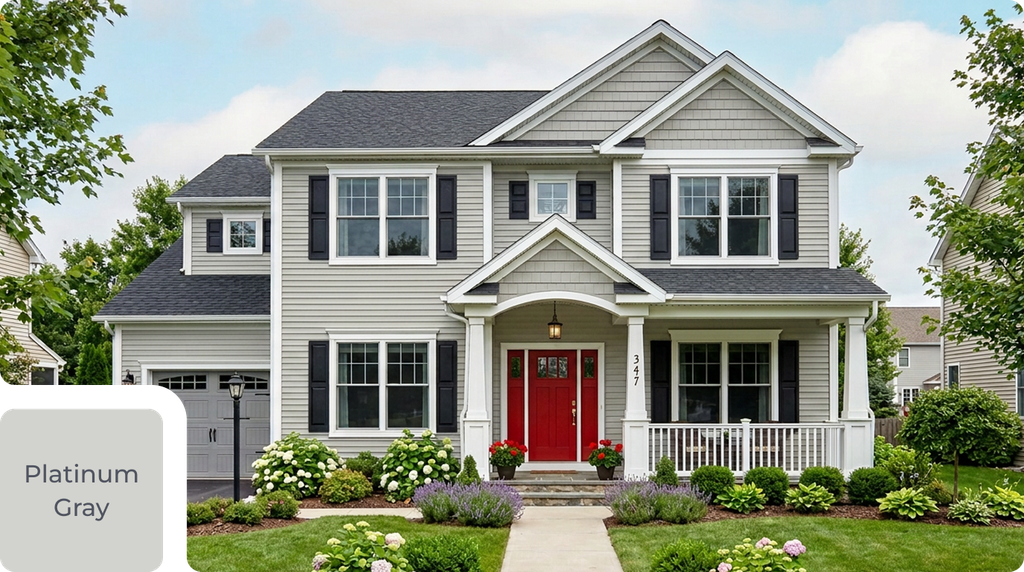
Contemporary Homes: Versatile Grays
Not sure what kind of home you have, or have a suburban contemporary? You can’t go wrong with gray. It’s the most flexible siding color on the market. Depending on the colors you pair it with, it can lean modern or traditional. Some options include:
- Siding: Sterling Gray, Platinum Gray or Storm
- Trim: White or black
- Pair with: Black shutters and a vibrant red door.
Siding Color Mistakes to Avoid
- Keep trim and siding colors visually distinct. If the trim is too close in shade to the siding color, it flattens the look of the home. Contrast is usually best, unless you’re following a more modern black-on-black color palette.
- Don’t make your final selections without seeing it in natural light outside your home. Better yet, view your options in morning, afternoon and evening. You’d be surprised how much variation there can be in one color at different times of day.
- There’s no need to reinvent the wheel. Keep a simple color palette, sticking to one main siding color, one trim color and one accent color.
- If you’ve got HOA rules around exterior color palettes or historic district guidelines, give those a look before you consider your options. Even if you don’t have any restrictions on your color palette, it’s worth considering what’s popular in your area.
- Your home style should be the ultimate deciding factor for the color you choose. Don’t pick a trendy option that fights the style of your home. They should blend harmoniously.
Beyond Siding and Trim: Coordinate Your Accents
Remember the 60-30-10 rule? Accents make up 10% of your home’s exterior color combinations, yet they make a bigger impact than you may think. Some elements to consider include:
- Roof: Your entire color palette rests on your roof. While many roof colors are versatile by design, new colors should be directly compared in morning and evening light for best results. This should be the first element you consider when choosing new colors.
- Entry doors: Traditionally, entry doors match the trim, but that rule has fallen by the wayside in recent years. This is the easiest place to add a pop of color, so if you want to go bold with one element, your front door is the best place to do so.
- Shutters: Use a shade that contrasts with siding without matching the trim for optimal effect. Many homes pair entry door and shutter colors, but you don’t have to.
- Window frames: An underrated but key part of your home’s exterior, window frame colors are a subtle way to better accent your color palette. Keep frame colors in mind when picking out your trim and entry door. These elements should coordinate.
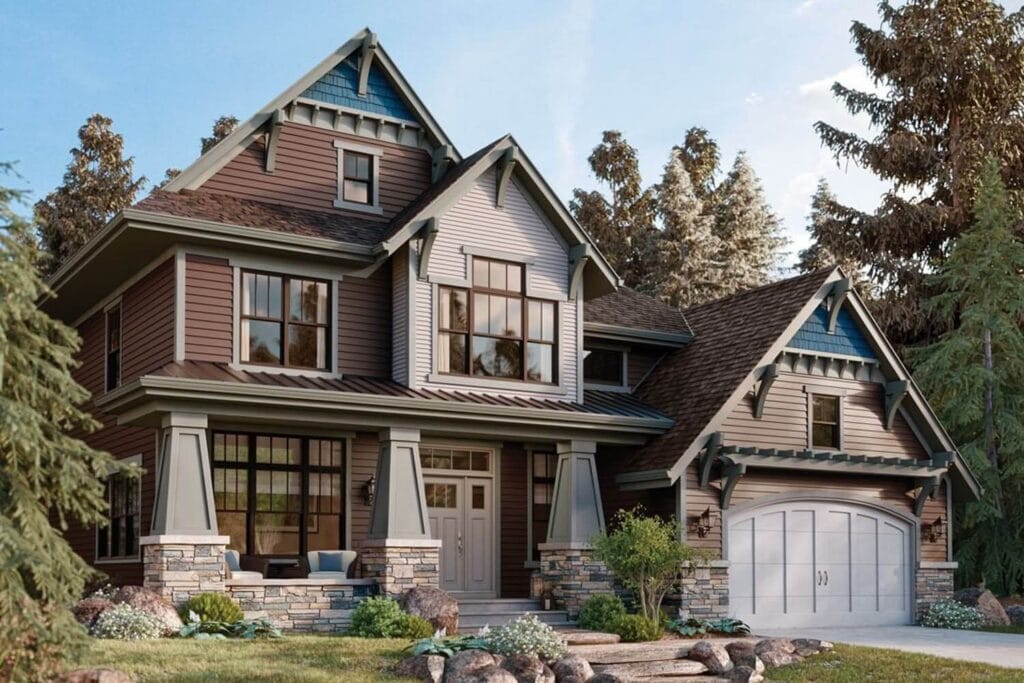
Play to Local Strengths: How Your Neighborhood Shapes Your Palette
The Mahoning Valley has a character all its own, shaped by generations of families, historic neighborhoods and the natural beauty of Northeast Ohio. From Youngstown’s grand historic homes to the quiet residential streets of Poland and Canfield, there’s plenty of local inspiration for your home’s exterior.
In Youngstown’s Wick Park and Fifth Avenue neighborhoods, stately Victorian-era homes, Craftsman designs and other early 20th-century architecture reflect the city’s rich history. Many feature expansive porches, intricate trim and distinctive rooflines worth preserving. Just a short drive away, communities like Boardman and Austintown offer a more suburban feel, with classic ranches, split-levels and traditional two-story homes. Head toward Poland or Canfield, and you’ll find historic village charm alongside newer homes and more spacious properties.
The Mahoning Valley’s landscape offers inspiration, too. Those natural features can help shape your home’s exterior. Whether you’re refreshing a longtime family home or updating a newer property, choose details that complement its architecture and feel right at home in your corner of the Valley.
Ready to Give Your Home Its Best Look Yet?
When it’s time to give your home a fresh look, Window World has the color combinations you need to completely transform your curb appeal. Our team is happy to help you compare possible siding and trim options, see how they fit with your home’s style and even complete your look with beautiful, energy-efficient doors and windows. Plus, with professional installation, you’ll know you’re getting a look that will last. Find out more by requesting your free estimate today!
Frequently Asked Questions About Siding Color Combinations
What siding color goes best with white trim?
Nearly every siding color looks great with white trim, so there’s no right or wrong answer here. Darker siding shows more contrast and paler siding colors get a crisp, clean finish.
What trim color works with dark siding?
For dark siding colors, white trim is the classic choice. If you have a traditional home or want a more classic color palette, this is your best option. However, pale gray or off-white are also good choices. If you have a modern home, you might consider going monochrome with black-on-black siding and trim.
Can I use more than one siding color?
Yes, you can use more than one siding color, but we’d recommend keeping it to two related shades. Alternatively, you could use a siding color with stonework or shakes and scallops as an accent. Our team can help you plan out how to break down where your main siding and accents should go on your exterior to create intentional balance.